Lady professor by day. Reader by night. Sometimes I write books.
Author: Christine
I'm a fan of taking long walks on sunny days, browsing through the library on Saturday afternoons, and eating popcorn for lunch. I am a native North Dakotan, a professor at Westminster Universty in Salt Lake City, Utah, and author of some books. I'm represented by Alyssa Eisner Henkin of Trident Media Group. When I'm not writing or teaching writing, I'm an avid reader and an enthusiastic listener of podcasts (especially podcasts about books). I hate golf, avalanches, and bees.
I know an actual book of the month club exists. I belong to one with only one member: Me.
Once a month–always on the first Saturday of the month–my dear husband looks at my TBR list and selects a book for me. It comes in the mail a few days later, and I get excited every. single.time.
I love being surprised with book mail. I mean, yeah, I pick the contenders, but someone else picks the book. It’s the best of both worlds: I get a surprise, but I don’t have to risk getting a book I’ve already read or one that I’m not really interested in reading.
My personal Book of the Month Club has been running for the last three or four years. My husband has never missed a month, and he’s quite thoughtful about what he picks. If I’m going on vacation, he’ll try to pick something lighter (in terms of content and actual weight.) If I’m on break from school, he’ll pick something heavier and longer.
He’s basically the best husband in the world who knows that all I really want out of life is surprise book mail every now and then.
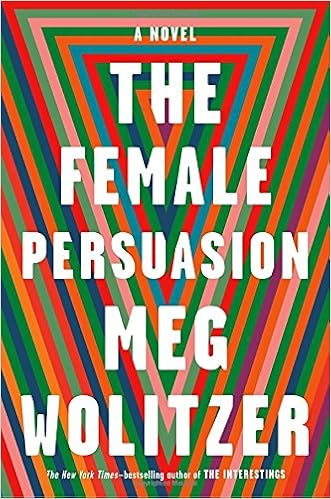
Elevator Pitch: A bookish girl, Greer Kadetsky, heads off to college and discovers all of the ways the world is sympathetic to men (especially rich white men), often at the expense of women. After meeting Faith Frank, a famous feminist in the vein of Gloria Steinem, Greer devote herself to feminist cause. Greer’s exciting new life upends all of her plans, including her plans with her high school boyfriend Cory, who has an awakening of his own.
My Tagline: Hmm, this is tough because the novel is really quite original. I’d say The Feminine Mystique meets Lean In meets Backlash (with a teeny-tiny dash of The Devil Wears Prada–but just the good parts).
My Opinion: Every once in a while, you come across a book that says things you’ve felt and thought but that you’ve never been able to give voice to. Or that you’ve struggled to arrange in any coherent way. Wolitzer is one of those authors who keenly says all the things you didn’t even know you wanted to say.
The novel itself takes on problems with white feminism and calls out lack of intersectionality. But it also reckons with what that means in a world that’s financed (largely) by old white dudes who, if they even support women’s causes, are far more interested in charismatic and conventionally attractive white women figureheads.
I know some readers were bored or frustrated by the plot. It’s definitely not a plot-driven book, though I think it’s compelling enough. I felt like Cory’s story was muddied Greer’s at times, and I was more interested in her and her relationship with Faith than I was with him. He might have needed his own book, actually.
What kept me reading was the characters, especially Greer. She’s a stand-in for millennial (or post-millennial?) feminists, and I really wanted to see how she would square second-wave feminist with her own views. Ultimately, I think Greer’s conclusion is a little depressing and doesn’t leave a ton of hope for major structural changes, nor does it offer much hope for intersectionality. But I think it’s a pretty realistic portrait of what feminism actually looks like now–and why we need to keep talking about these issues.
Wolitzer points out all the ways that the world is made for men. Here are some of my favorites:
Referring to badly behaved men: “How could men like this even hold their heads up? Yet they did” (277). [Seriously. How do some of the dudes of this world not just die of embarrassment??]
Describing a meeting with men and a woman: “Faith, when she spoke, was perceived as smart and articulate too, but the men felt free to cut in and interrupt her” (282). [Yup.]
Discussing why women are so hard on ourselves: “Faith thought, it’s not that I’m so hard on myself exactly, it’s that I’ve learned to adopt the views of men as if they were my own” (284). [Yup.]
Talking about feminism in general: “She was reminded by older activists that the vanguard had to be extreme so that the more moderate people could take up the cause and be accepted” (287). [I’d never thought of it this way before.]
Describing privileged men: “Men like him romped through the world, and it wouldn’t be possible to take away his sense of freedom or security” (300). [I’d like to romp.]
Writing about the things men “let” women do: “Men give women the power that they themselves don’t want” (325). [So true. ]
Questioning what it means to be a “good” girl: “Good girls could go far, but they could rarely go the distance. They could rarely be great” (352). [Definitely. Being a “good girl” is not a goal.]
Verdict: Definitely read it if you are interested in feminism. It would make a great high school or college graduation gift, in fact.
If you loved Wolitzer’s other books, I think you’ll like this one too. My favorite remains The Wife.
It’s taken me a long time to become a grazing reader; that is, a reader who can pick up a book and read a page or two and then put it down and continue on with all the other quotidian tasks of life that don’t involve reading.
I used to think reading was an occasion. I felt like I couldn’t read until I had everything else done. Only then could I sit down (or lie down) to gulp, usually at bedtime when my energy was at its lowest.
At some point in my life, I had inadvertently absorbed the lesson that day-reading is a sign of sloth. Or worse, a sign of decadence. I sort of viewed day-reading like day-drinking: It’s great fun, but you don’t want the neighbors to know you do it.
These days, I’ve decided it’s okay to day-read, whether grazing or gulping. If I have time, I’ll sit down and gulp IN BROAD DAYLIGHT. I don’t even close the curtains.
During the school year, when I’m teaching, I have less time to day-gulp, but I still graze. I can read a page or two before class or while I’m waiting for a student or while I’m eating lunch or while on the bus. (I used to fill that time with email until I realized, after noisily complaining about how much email everyone sends, that I send more than everyone else combined.)
The trick to grazing is having a book that you can dip in and out of easily. I save more complicated books for gulping. (And the hardest books are for day-gulping). Here are some books I read recently that are great for unapologetic day-grazing:
You Think It, I’ll Say Itby Curtis Sittenfeld
Short stories are always good for grazing. This collection is a funny and thoughtful meditation on gender, love, and sex, among other things. My favorite thing about Curtis Sittenfeld as a writer is that she isn’t afraid to create characters who are embarrassing and awkward.
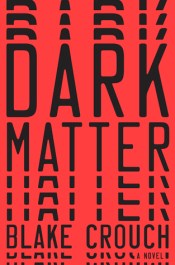
Dark Matter by Black Crouch
This one is an excellent yarn with short, propulsive chapters. It’s two parts thriller and one part sci-fi about a guy who sees how his life would have changed had he made different choices. Fun and exciting, but not at all taxing on the brain (and I mean that as a compliment).
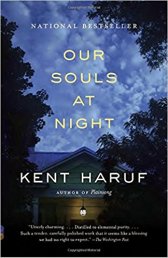
Our Souls at Night by Kent Haruf
Everything Kent Haruf writes feels as comfortable and quietly profound as a porch swing at dusk in June. This novel is about a widow and a widower who find something incredible together. Kent Haruf died a few years ago, which means I’ll have to be satisfied re-reading his work for the rest of my life.
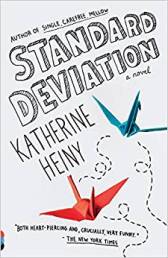
Standard Deviation by Katherine Heiny
You don’t need to know anything about the plot for this one. It’s just riotously funny. Perfect for laughing out loud.
So what kind of reader are you? What are your favorite gulps and grazes?
All my library holds came in at exactly the same time, just when I received my book-of-the-month pick. Here’s what’s on tap for the next couple of weeks. Here’s what I’ll be reading over the next few weeks.
I’m starting with Stephen McCauley’s My Ex-Life. He’s been one of my favorite authors since high school/college.
I’m always disappointed when I read a much-hyped book that all of my favorite reader friends loved, only to find that I just didn’t get it.
I mean, I understand that everyone has different tastes. Books come into your life at the right or wrong time. Every reader is unique. Et cetera. Et cetera. So not liking a popular book says nothing about the book itself. It just means it wasn’t for me.
“You are a very stupid book, but this coffee seems fine.”
Still, it bums me out when I don’t love popular things because I always feel like I missed something obvious that everyone else can see.
Like Star Wars. I’ve seen three of the 400 interminable movies and they are just dumb and boring, right?
Same with Lord of the Rings. I saw the first movie and found myself wishing I was watching paint dry–or worse–watching golf.
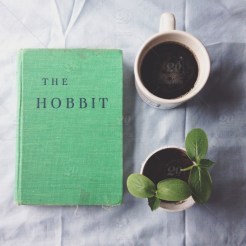
I tried to read The Hobbit in junior high and decided I’d rather read my algebra book. Around the same time, my best friend lent me her beloved copy of The Lion, the Witch and the Wardrobe. I couldn’t get past the magic closet.
It’s pretty clear that I just don’t do fantasy well. I read the first three Harry Potter books and heartily agree that they are charming, imaginative, and well-written. I just didn’t care what happened. I don’t like reading anything where an elf or a magical wood sprite or something could appear at any moment.
Unsurprisingly, I tend to avoid fantasy books, but occasionally I’m willing to try magical realism, especially if trusted readers recommends something. Here are four (relatively) recent books that the world loved but that gave me Hobbit vibes.
4. Lincoln in the Bardo by George Saunders I was really disappointed that I didn’t like this one because I love Saunders’ short stories, especially the kooky ones. But this novel just made me feel like the voices in my head had ADHD. Too many people. Too much talking. Too much chaos. If I wanted that, I’d socialize on the train at rush hour.
3. The Night Circus by Erin Morgenstern
I should have known this one wasn’t for me because I hate magicians. I feel like they are always just waiting to pull a rabbit out of a hat when I’m not looking. The writing is beautiful, of course, but it just wasn’t for me. Maybe if it been, say, The Night Library or the The Night Movie Theatre, I would’ve liked it more.
2. The Time Traveler’s Wife by Audrey Niffenegger This book made me feel the same way I feel when a couple I don’t like hold me captive and tell me their uncondensed how-we-met-and-fell-in-love story. I get it: You overcame odds. You are still insufferable. Please stop telling me your “love” story
1. The Girl with the Dragon Tattoo by Stieg Larsson (RIP)
On the plus side, there was no magic, no talking dead people, and no time travel. On the negative side, there was a mediocre white man solving mysteries while objectifying a manic pixie dream girl. My favorite parts where when Blomkvist was making sandwiches. I estimate that was at least thirty percent of the book. I’m classifying this as fantasy because I don’t believe Blomkvist would ever be irresistible to any human woman.
What books did you hate that everyone else seemed to love?
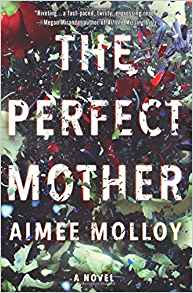
Elevator Pitch: Ani FaNelli has a secret, but she’s not going to let that stop her from getting the life of luxury she wants. She’s going to marry a blue blooded New Yorker, continue working at a glamorous women’s magazine, carry designer handbags, and make you so jealous of her perfect life that you’ll want to weep. But what if her past collides with her present?
My Tagline: Speak by Laurie Halse Anderson meets Sex and the City
Genre: I’m going to call it contemporary fiction. I found it on a psychological thriller list, and I don’t think that’s a good fit. It’s definitely not cotton candy, either. So let’s just call it fiction.
My Opinion: It’s hard to find novels that deal responsibly and authentically with issues surrounding consent. I love that Knoll isn’t afraid to write a character who is angry, oftentimes unlikable, and brutally honest with readers about who she is (even if she isn’t honest with anyone else in her life).
While it isn’t a YA novel, I think it gets at important issues in ways that are more complex, more nuanced, and more mature than you might find in YA lit. It would pair well with Speak.
Verdict: Buy it. You’ll want to give it to someone else in your life, preferably a mature young adult reader.
Elevator Pitch: Crappy husband plans exciting vacation day for his hot wife with a bad digestive system. Psychological thrills ensue.
My Tagline: Sleeping with the Enemy meets Anthony Weiner
My Opinion: I love a good unreliable narrator, and Paul Strom is pretty unreliable. He’s also arrogant and socially clueless, which makes him an even more interesting character. You know he’s up to something, but you’ll keep reading to find out what it is.
Paul’s wife, Mia, is wholly sympathetic. (Of course, I would think that: I too have been in a relationship a Paul Strom.) But Mia throws a few curveballs that will make you wonder if you really know her at all.
Verdict: Borrow it from the library when you have an entire weekend to read it in big gulps. Pairs well with sweatpants and slippers.
I had a big reading month, in part because I finished two weighty nonfiction books that I’d been reading since December. The other reason I read so much is that I submitted grades the second week of May and let myself fall into a pile of books as a palate cleanser. I read quite a few fluffy books that didn’t take much time.
I usually only manage about five or six books a month, but I read a whopping twelve books in May:
I’ve been trying to diversify my reading in terms of genre and publication dates. I’m also trying to read more fiction by non-American writers. Here’s what May looked like for me:
Genre
3 Contemporary Fiction
4 Mystery/Thriller
1 Short Story Collection
4 Nonfiction
Publication Dates
4 Published in 2018
5 Published in last five years
3 Published before 2013
Author Identity/Nationality
9 Women
3 Men
7 American
2 British
1 New Zealander
1 Japanese
1 Singaporean
I liked everything I read this month, but I do have superlatives:
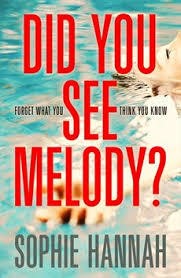
Most Entertaining Did You See Melody? by Sophie Hannah
Everything Sophie Hannah writes is so readable because she is so specific and vivid in the development of her characters and settings. Plus, her plots are bonkers, which means that you can never figure it out until she ties the ends together.
In this one, Cara Burrows flees her husband and children in England for reasons that we learn later in the book. Cara arrives at a five-star spa/resort in Arizona, a vacation she’s secretly booked. Not a soul in the world knows where she is. When she arrives, the desk clerk gives her the wrong room key, and she enters a room occupied by a man and a teen girl. After a night of sleep (in the correct room), Cara realizes that the girl she saw the night before was America’s most famous murder victim. So how can she be alive?
Most Disturbing Confessions by Kanae Minato It was disturbing in all the right ways–exactly how I want a taut psychological examination to play out. Yuko Moriguchi, a middle-school teacher, is mourning the accidental death of her young daughter, Manami. But we soon learn that Manami’s death was no accidental. Yuko knows she was murdered. And she knows that two of her students did it. The rest of the book is a twisted tale about what happens when guilt, evil, and vengeance fester.
My Tagline:The Secret History by Donna Tartt meets Black Mirror
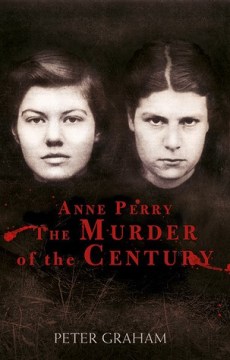
Honorable Mention goes to Anne Perry and the Murder of the Century by Peter Graham, a true crime account of a heinous murder by two teen girls in New Zealand in the 1950s. The murder is disturbing enough to begin with, but it’s even more unbelievable when you find out that they killed the mother of one of the girls. One of the cold-blooded murderers grew up to be novelist Anne Perry. True crime can be lurid and objectifying; this one was neither. It’s an interesting portrait of two girls who somehow feed into each other’s madness into they spiral out of control.
My Tagline: My Favorite Murder (the podcast) meets Ann Rule
Most Educational The Power of Happiness by Sara Ahmed
If you think happiness is an uncomplicated emotional state, think again. Happiness is every bit as hegemonic as any other cultural institution that’s used to justify and reinforce marginalization of the least powerful. Ahmed does a masterful job of unpacking all of the ways that happiness–and our understanding of what it means in our lives–is deeply rooted in problematic ideas about race, class, and gender.
I read Charles Duhigg’s previous book, The Power of Habit, last year, and I loved it enough that I decided to use it for a class I’m teaching next semester. I ran across Duhigg’s latest book on the New Nonfiction shelf at my local library, and I read it in two days. Then I wished that I’d take more time with it. I’m definitely going to buy it because I’ll need to re-read it to really apply the lessons.
Books and articles about productivity are my absolute favorite nonfiction sub-genre. I can’t explain why, but I’ll read absolutely anything about productivity. Like, if you told me you wrote an article explaining how to increase production of flibbetynibbets at the flibbettynibbet factory in the city of Flula Forgunberg, I would be like, “I don’t know what those things are, but I must read your article immediately! Send it to me!”
Elevator Pitch Stop screwing around and get stuff done. But don’t just get any old stuff done. Get the right stuff done. And know the difference between busy (my resting state) and productive (my unicorn state).
Reasons to Read It
Engaging narratives. Duhigg is a master at finding a story about some person or case that perfectly illustrates the point of each chapter. He has a way of taking what could be really dry research and turning it into propulsive narratives that keep you turning the pages. I particularly like his technique of interspersing narrative with research to keep the chapters balanced.
Applicable recommendations. I’m productive at times, I guess. I mean, it’s all relative. I’m more productive than, say, a cat. But I’m certainly not a Charles Duhigg who writes incredible books while holding down a full-time job as a reporter. (Yeah, I write books and have a job, but I’m not nearly as good at either as Duhigg is.)
What I loved about each chapter of this book is that Duhigg provides clear, evidence-based strategies that anyone can emply to move away from busy and toward productive. From a very clear chapter on what makes teams successful (hint: It’s not at all what you’d expect) to techniques for being more innovative and creative, Duhigg demonstrates exactly how to meaningful engage in work. I particularly loved his appendixes where he showed how he applied these techniques himself.
Reasons to Give It the Side-Eye
No side-eye from me on this one, but I do have one quibble: There’s just so much to take away from the book that if you asked me to talk about how I am planning to apply all of these things in my daily life, I’d be overwhelmed. That’s not a flaw in the book, though. I think it’s just the nature of these kinds of books. They provide so much information, but it’s up to the reader/student to figure out how to make it work. Still, if Duhigg is taking suggestions, I’d love to read a follow-up book—a memoir—of sorts where he applies all of these things in everything he does all day long.
What I Learned (or Re-learned)
I have bad habits. Every time I read about focus, I’m reminded what terrible habits I have when it comes to focus. I regularly do 84 things at once. I keep multiple inboxes open while I’m working, along with at least one IM window. I frequently interrupt my thinking to answer texts and phone calls. And on top of that, I have an episode of Seinfeld running in the background right this very moment! I simultaneously have no idea why George is upset, nor what I intended to say in this sentence. I’m a walking recipe for disaster. Duhigg should use me as a cautionary tale.
This book, once again, reminded me that I’m never going to be particularly innovative or creative if I can’t learn to focus. And that chaotic jumping from task to task is precisely why I feel totally overwhelmed all the time.
Successful people say no. I really appreciated Duhigg’s anecdote about really successful people (like writer and surgeon Atul Gawande) who prioritize key projects and outcomes and then make decisions based on those goals. I say yes too much, which just means that my own outcomes get pushed to the bottom of the list. Or I end up doing them when I’m supposed to be resting or spending time with loved ones. I’m getting better, but Duhigg reminded me that prioritizing should be paramount in anyone’s life.
Teamwork is hard, but not impossible. I teach classes where collaboration is required. I’ve watched teams soar to success and I’ve watched teams implode. I’ve driven myself bananas trying to figure out how to “fix” failing teams and how to “bottle” the process of good teams. Duhigg presents the research that confirms an important point: Team norms are the determining criteria for success.
Of course! Of course it’s the team norms! But I never thought about that until reading this book. It doesn’t matter who is on the team (assuming that you don’t have a team of monkeys whom you want to writeHamlet, The Sequel). What matters is the way they agree to act on the team itself. They can all be buttholes in real life. That’s fine. They just have to act in a mutually agreeable way while on the team.
Know why you do things. I’m terrible about doing whatever task will allow me to check the greatest number of items off of my to-do list. I frequently fall prey to believing that’s a good use of my time. In reality, I send a lot of email and make a lot of calls that probably don’t lead to any strategic goals.
Once I started asking myself why I was doing certain things, I found that I frequently had no answer. I don’t know. I’m just doing it! Now I think carefully about what my end goals are and how the day-to-day tasks lead to those end goals. I’m not cured of my to-do-ness yet, but I’m getting better.
Worth Reading? Definitely. Buy it. You’ll want to write in the margins.

 Elevator Pitch: A bookish girl, Greer Kadetsky, heads off to college and discovers all of the ways the world is sympathetic to men (especially rich white men), often at the expense of women. After meeting Faith Frank, a famous feminist in the vein of Gloria Steinem, Greer devote herself to feminist cause. Greer’s exciting new life upends all of her plans, including her plans with her high school boyfriend Cory, who has an awakening of his own.
 Dark Matter
 Our Souls at Night
 Standard Deviation



 Elevator Pitch: Ani FaNelli has a secret, but she’s not going to let that stop her from getting the life of luxury she wants. She’s going to marry a blue blooded New Yorker, continue working at a glamorous women’s magazine, carry designer handbags, and make you so jealous of her perfect life that you’ll want to weep. But what if her past collides with her present?
 Did You See Melody?
 It was disturbing in all the right ways–exactly how I want a taut psychological examination to play out. Yuko Moriguchi, a middle-school teacher, is mourning the accidental death of her young daughter, Manami. But we soon learn that Manami’s death was no accidental. Yuko knows she was murdered. And she knows that two of her students did it. The rest of the book is a twisted tale about what happens when guilt, evil, and vengeance fester.
 Honorable Mention goes to
  The Power of Happiness
 Christine Seifert